












Quick Summary
-
For meeting and event professionals, one of the most important attributes to look for in a keynote speaker is deep expertise in, and knowledge of, their topic.
-
An increasingly competitive marketplace has led many speakers to rebrand themselves in an effort to stay relevant as new, trending topics (such as AI) take over conference agendas.
-
This dynamic underscores the importance of vetting a speaker’s expertise by carefully examining their body of work, browsing historical archives of their speaker website, and understanding the long-term evolution of their expertise.
[Editor’s note: In addition to being Watermark’s founder, Jon Picoult is also a frequent keynote speaker at corporate conferences and association events. He periodically blogs on topics of interest to meeting and event professionals.]
Established expert or trend-chasing neophyte – which one best describes the keynote speaker you’re thinking of hiring?
For event organizers, few decisions are more important than the selection of a keynote speaker. However, making an informed decision in that regard has become more challenging, thanks to a marketing arms race that has made it difficult to separate speaker fact from fiction.
Synthetic speaker reels which misrepresent an individual’s “large stage” experience are a prime example of the misleading marketing tactics that have, unfortunately, become all too common in the speaker industry.
Another example, however, is even more fundamental, as it relates to how a speaker defines their basic expertise. For some speakers, that definition can be fluid, as they try to stay relevant in a conference and event marketplace where buzzwords often carry the day.
To see an illustration of this, look no further than the current burgeoning ranks of speakers who bill themselves as AI experts. While some speakers have truly earned that moniker based on their specialized academic and/or professional background, scores more have recast themselves as AI authorities through what is effectively just a rebranding exercise.
Yesterday they may have been a blockchain expert, a change management guru, or a customer experience thought leader. But today, they’re each of those things plus AI strategists. (It’s not unlike the years of the dot com bubble, when many companies quickly appended “.com” to their official names in an attempt to signal relevance in a new, Internet-enabled era.)
To be clear, this is not an entirely new phenomenon – it’s happened before, as other trending topics have rippled through the speaker industry: Workplace culture speakers rebranded as DEI speakers. Technology speakers recast themselves as cybersecurity speakers. Change management speakers reclassified as remote work experts. Innovation speakers became futurists. The list goes on and on.
Some may look at this dynamic and simply excuse it as an application of the “adapt or die” business mantra to the speaker community. However, the problem with that explanation is that it ignores something that is absolutely central to the speaking business: genuine expertise.
Credibility is key for speakers (as it also is for the event professionals who hire them, and the audiences who listen to them). But credibility is forged through the crucible of lived experience. It cannot be conferred through rebranding and relabeling.
“Credibility is forged through the crucible of lived experience. It cannot be conferred through rebranding and relabeling.”
Does it make sense for a customer experience expert to sprinkle some AI-related examples into their keynote? Or for a management speaker to talk about best practices for handling hybrid work? Yes, but those are simply examples of keeping one’s content current – as opposed to redefining the domain on which you focus.
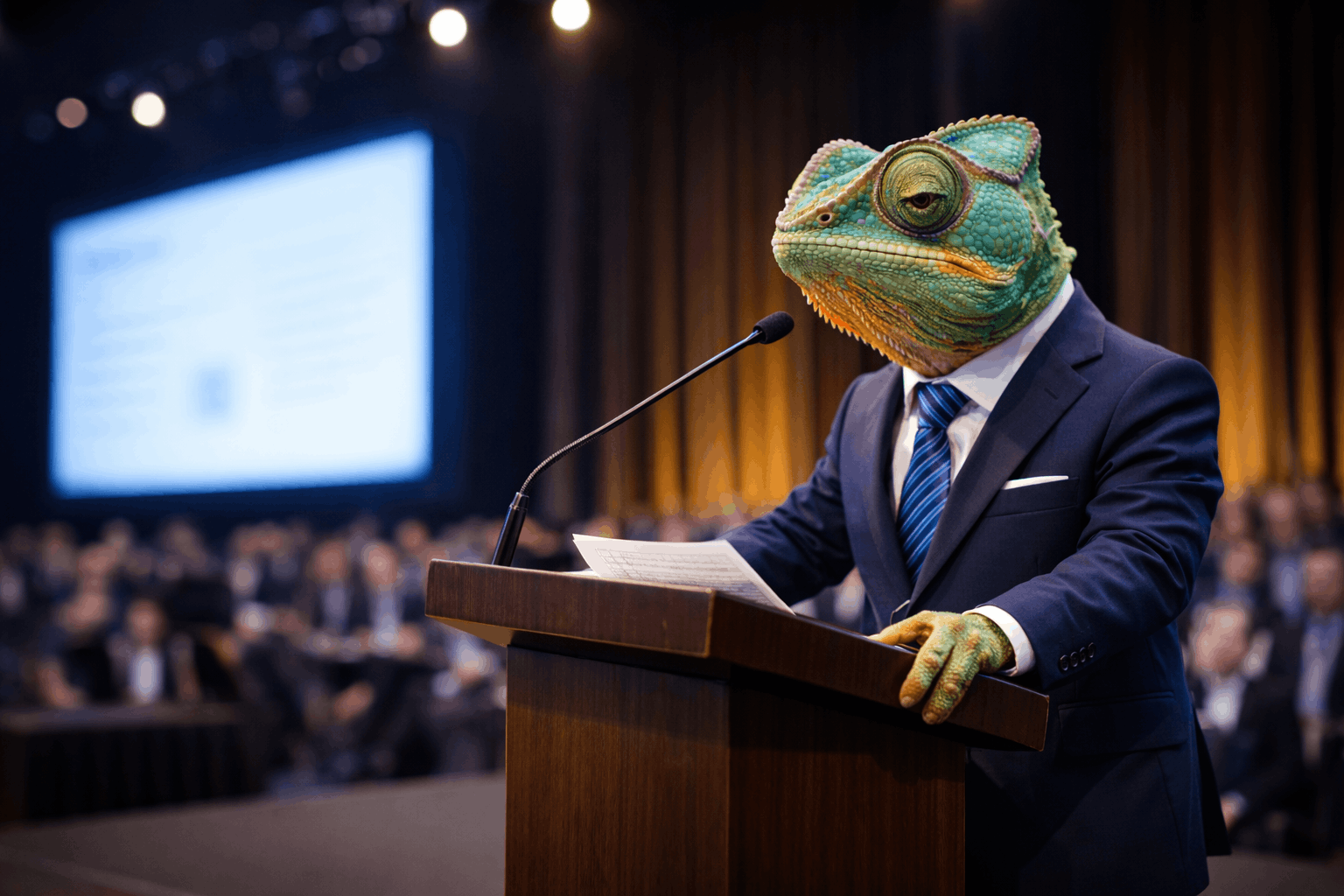
So, if you’re in the market for a keynote speaker, how do you know if an individual’s expertise is truly strong rather than superficial? How do you spot the “chameleon keynoters” from those with a longstanding commitment to a particular discipline? Here are three techniques for doing so:
1. Browse archives of the speaker’s website.
Perhaps the simplest way to spot a chameleon keynote speaker is to look at how they characterize their expertise over time, in their own words. Drop the speaker’s website URL (or their bureau profile page) into the Wayback Machine and you’ll be able to scroll through years of archival site snapshots. Browse their site from a few years ago (and even further back) to see if there’s long-term consistency in how they frame their expertise and describe their credentials.
2. Examine the speaker’s body of work.
Search online for articles and posts the speaker has written (or browse their blog, if they have one). Listen to podcasts they’ve been on recently, versus those recorded years ago. Is there a consistent theme through it all? If, at some point, the speaker seemed to start covering new ground, did it feel like a natural extension of their expertise – or an abrupt pivot? In addition, look for books, research, and frameworks the speaker has authored. Such intellectual property takes time to develop, and can be a strong indicator of deep expertise (in contrast to trend-chasers, who tend to repackage publicly available ideas).
3. Ask the speaker directly about their lived experience.
One thing that trend-chasing chameleon keynoters are missing (other than true expertise) is history. During speaker vetting conversations, ask pointed questions that would help reveal if the individual’s interest and experience in a particular subject is relatively new. For example: “How did you first become interested in this topic?” or “How has your thinking evolved over the past decade?” or “What do you think has been your greatest contribution to this subject area?” A lack of depth in the speaker’s experience can quickly become apparent through such probing.
In an expertise-driven business such as public speaking, there’s a lot to be said for staying in your lane – cultivating deep knowledge of a subject that shines through both online and onstage.
In the current hype-heavy speaker marketing environment, event professionals need to be curious, well-informed truth-seekers. They must be skilled at distinguishing between genuine expertise and opportunistic branding, because when that speaker steps onstage — your audience will spot the difference.
[A version of this article also appeared on the Trade Show News Network.]
Jon Picoult is the founder of Watermark Consulting and author of the Wall Street Journal featured book, “From Impressed to Obsessed.” A former Fortune 100 executive, Princeton-trained in Cognitive Science, Jon helps global brands use the psychology of “memory sculpting” to drive ROI and turn customers into lifelong fans. Follow Jon on LinkedIn / Instagram, or subscribe to his monthly eNewsletter.